
Thought Leadership
3kW vs 6kW Fiber Laser Cutting Machine: A Practical Buyer Guide
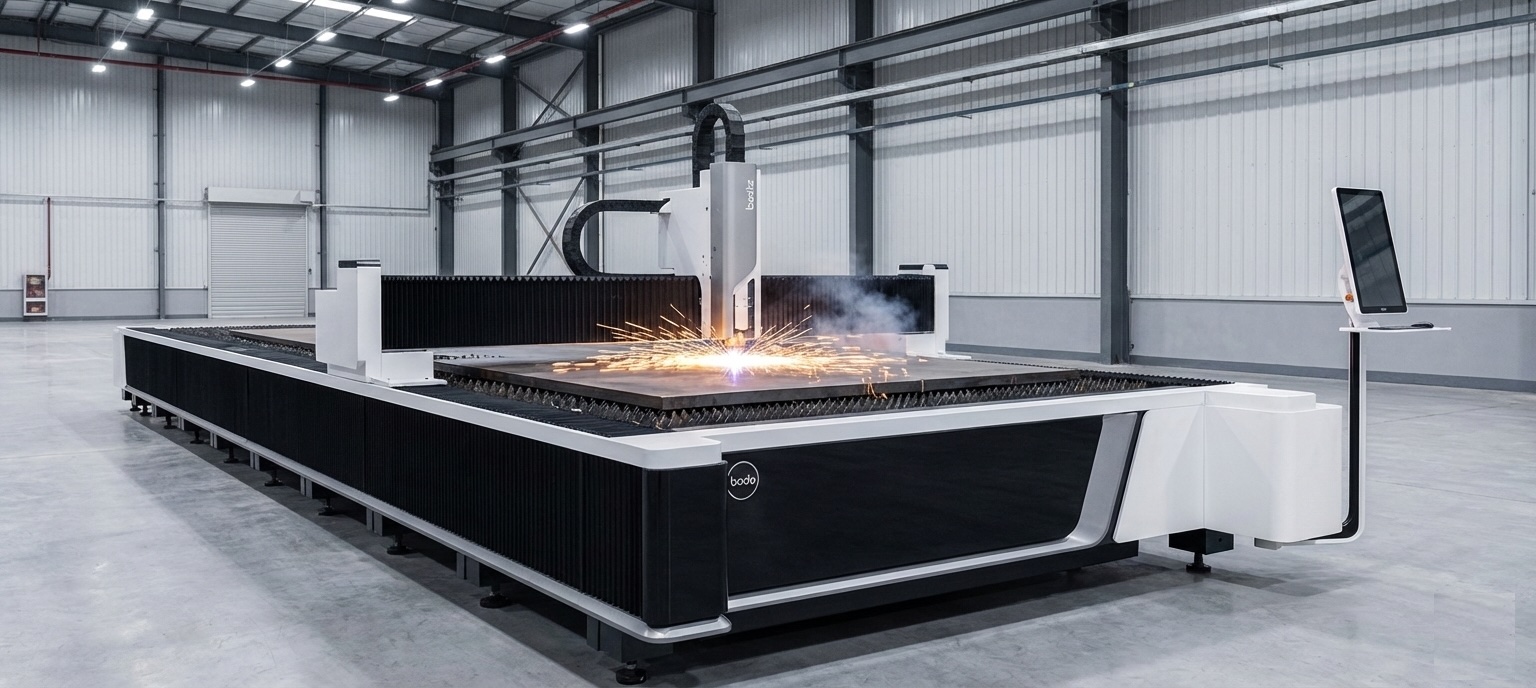
A fiber laser cutting machine cuts metal by focusing a fiber laser beam through an autofocus cutting head while assist gas (N₂/O₂/air) clears molten material and shapes edge quality. Choosing 3kW vs 6kW is less about "bigger is better" and more about matching dominant thickness + daily throughput + operating cost to your workshop reality.
What you'll actually notice: 3kW vs 6kW in a workshop
Most buyer guides cluster around three real-world differences:
Throughput on medium thickness
When your job mix shifts into medium thickness more often, 6kW tends to reduce cycle time per part and improve process stability.
Job flexibility (mixed workload)
6kW generally handles a wider range of jobs without constantly pushing the limits of settings, gas strategy, or cut quality.
Cost per part (not just machine price)
6kW costs more upfront and can raise operating costs, but may lower cost per part when utilized correctly (more parts/hour, fewer bottlenecks).
SERP winners consistently emphasize: higher power increases thickness capability and speed, but must be justified by your workload and costs.
Job Profile Method: choose power from your real jobs (5 questions)
Use your last 1–3 months of orders:
- Top 3 materials: mild steel / stainless / aluminum / others
- Dominant thickness: where do ~70% of parts sit (mm)?
- Effective cutting hours/day: 2h, 5h, 8h+?
- Lead time pressure: are you queuing jobs or outsourcing?
- Shop constraints: 3-phase power, gas supply, floor space, extraction
Rule-of-thumb direction
- 3kW often fits shops doing mostly thin-to-medium work with moderate daily cutting hours.
- 6kW is commonly positioned as a versatile "sweet spot" when medium thickness appears frequently and throughput matters.
3kW vs 6kW comparison table (workshop-focused)
Indicative guidance; exact capability varies by machine configuration, optics, gas strategy, and process tuning.
| Factor | 3kW | 6kW | Why it matters |
|---|---|---|---|
| Best fit | Thin–medium, growing job shops | Mixed workload + frequent medium thickness | Matches your dominant thickness & queue |
| Throughput | Solid for moderate volume | Higher parts/hour when medium thickness is common | Drives cost/part and lead time |
| Upfront cost | Lower | Higher | Impacts payback and financing |
| Operating cost | Typically lower | Typically higher | Gas + power + consumables |
| Overbuy risk | Lower | Higher if most work is thin | Don't pay for unused capacity |
| Scaling | Good entry point | Better headroom for growth | Avoid premature "outgrowing" capacity |
How a fiber laser system works (quick mental model)
- Laser source (kW) generates beam energy
- Beam delivery routes energy to the head
- Autofocus cutting head focuses beam into a small kerf
- Assist gas supports cutting, edge quality, and melt removal
- CNC controller + motion system executes toolpaths (nesting, lead-in/out, pierce)
Specs that matter more than brochure headlines
1) Power (kW) + materials + dominant thickness
Power influences how fast you can process a thickness band and how stable edge quality stays. Guides typically recommend matching wattage to your most common material and thickness.
2) Assist gas strategy (quality vs cost)
- Nitrogen (N₂): cleaner edge (less oxidation), common for stainless/aluminum; higher gas cost.
- Oxygen (O₂): can help with thicker mild steel; oxidation trade-off.
- Compressed air: cheaper, but quality/finish may be a compromise.
3) Sheet vs tube: don't skip the workflow question
If your workload includes tube metal, decide whether you need:
- a dedicated tube laser (best specialization), or
- a combo system (flexible but with trade-offs)
For sheet, bed sizes like 3015 are common baselines; scale up based on plate size and handling needs.
4) Cutting head + optics + consumables (hidden downtime drivers)
Nozzles, protective windows, and lens cleanliness directly affect cut quality and uptime. A strong spare-parts plan matters as much as kW.
5) Chiller + fume extraction (non-negotiable for stability & safety)
Ventilation and extraction are repeatedly flagged in safety guidance for laser cutting processes.
Typical use cases (where fiber laser shines)
- General fabrication: brackets, plates, enclosures
- Contractors & construction: structural components, gussets
- Manufacturing: repeatable parts, tighter tolerances, nesting efficiency
- Stainless-focused shops: clean edges and consistent finish
- Mixed job shops: frequent changeover, varied designs
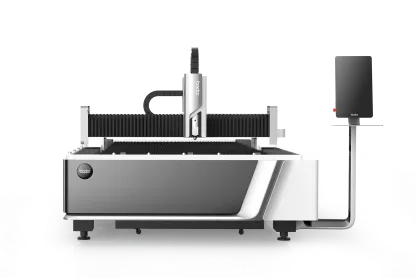
Featured product
Bodor A Series
Entry-level Sheet Metal Fiber Laser Cutting Machine
- 1Cost-efficient design — lower initial investment and operating costs for laser cutting
- 2High-speed cutting — 1.5G acceleration with lightweight, rigid structure for maximum throughput
- 3Flexible power options — available from 1.5kW to 60kW across 8 bed sizes
Fiber vs CO₂ (brief, intent-aligned)
For metal cutting, many buyer guides describe fiber as the default choice for modern metal fabrication, while CO₂ is often discussed for different material profiles.
Buying checklist (copy/paste for vendor evaluation)
Production fit
- Top materials + dominant thickness band
- Daily cutting hours + lead-time targets
- Job mix: one-off vs batch vs mixed
Quality
- Acceptable oxidation/finish requirements
- Tolerance needs & repeatability
- Sample cutting using your real materials
Operations
- Gas availability and monthly cost estimate
- 3-phase power readiness, compressor, chiller requirements
- Fume extraction design & filters
After-sales (reliability proof)
- Response time / SLA
- Local spares for optics & consumables
- Operator training + parameter library + remote support
- Preventive maintenance schedule
Cost, TCO & ROI (simple formulas + example assumptions)
TCO buckets
- CAPEX: machine + installation + training + power/air + extraction
- OPEX: electricity, assist gas, consumables, maintenance, downtime, labor
Simple ROI math
Cost per part (estimate):
(Monthly depreciation + monthly OPEX + labor) / parts per month
Payback (months):
CAPEX / monthly net benefit
Example assumptions (illustrative, not a promise)
- CAPEX (all-in): $250k
- Net monthly benefit: $15k (outsourcing reduction + added margin + labor/time savings)
- Payback ≈ 250 / 15 ≈ 16.7 months
When 6kW tends to justify itself vs 3kW:
- Medium thickness becomes frequent, and
- Your constraint is throughput/queue, not just "can it cut?"
Maintenance & safety essentials
Minimum maintenance discipline
- Daily: nozzle & protective window checks, housekeeping, compressor drain
- Weekly: slat bed cleanup, filter checks
- Monthly: chiller inspection, lubrication, baseline cut-quality validation
Safety essentials
- Laser product safety and laser processing machine safety are covered in standards such as IEC 60825 and ISO 11553.
- Ventilation/extraction is emphasized in occupational safety guidance for laser cutting/welding to reduce hazardous fumes and vapors.
Common mistakes & quick troubleshooting
- Excess dross: check gas type/pressure, nozzle condition, focus position, speed/power
- Burnt/oxidized edge: wrong gas strategy, slow feed, dirty optics
- Poor piercing: pierce settings, standoff height, lens contamination
- Quality drops after hours: chiller stability, lens/nozzle wear, extraction performance
- Frequent downtime: weak spares plan + unclear consumables SOP